Jul 15, 2026 · AI-Contract
Malaysia Gig Worker Contract 2026: What the New Law Means
Malaysia's Gig Workers Act 2025 is now in force. Here's what a compliant Malaysia gig worker contract 2026 must include, and who it applies to.
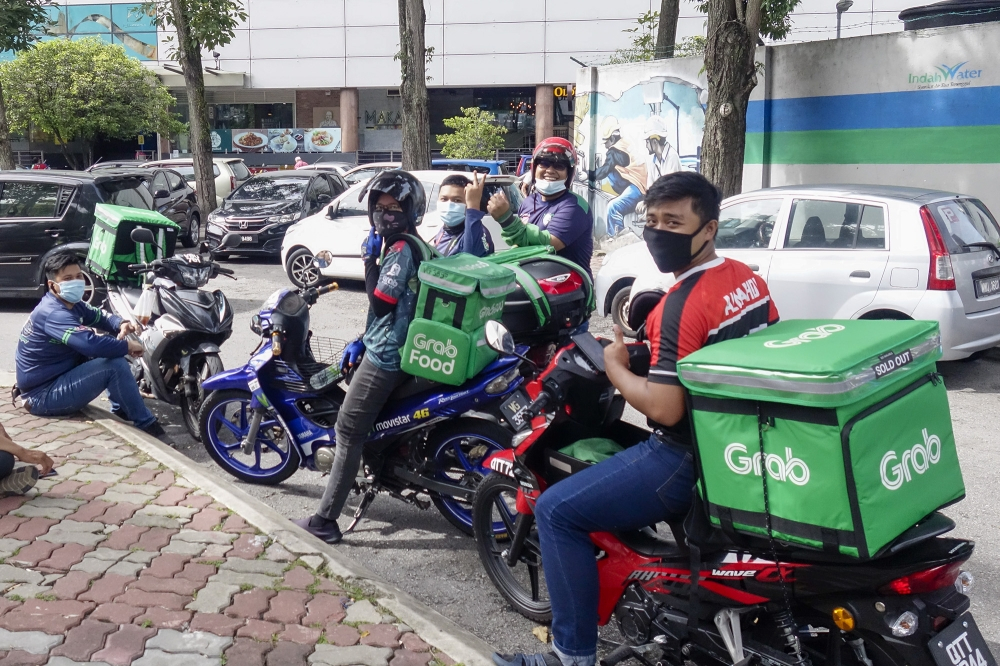
Malaysia Gig Worker Contracts 2026: What the New Law Means for Your Business
If you're a Singapore company paying a Malaysian freelancer, delivery partner, or digital contractor, the paperwork you used last year probably isn't good enough anymore.
Malaysia's Gig Workers Act 2025 (Act 872) came into force on 31 March 2026, and it changes the baseline for how gig work gets contracted across the country. It doesn't matter if you're a ride-hailing platform, a content agency using Malaysian designers, or a Singapore SaaS founder paying a KL-based virtual assistant — if the person on the other end is a Malaysian citizen or permanent resident performing services for earnings, the Act is now part of the picture.
Here's what actually changed, and what it means for the contracts you're using right now.
A quick recap: what is the Gig Workers Act 2025?
The Bill was passed by the Dewan Rakyat on 28 August 2025 and by the Dewan Negara on 9 September 2025. It received Royal Assent on 16 December 2025, was gazetted on 31 December 2025, and officially took effect on 31 March 2026. It's a substantial piece of legislation — 10 parts, 112 clauses — and it's expected to cover more than 1.6 million gig workers in Malaysia, spanning e-hailing and p-hailing drivers, freelancers, and non-platform gig workers in fields like events, media, translation, and creative work.
The core move is definitional. Malaysian law has historically split workers into two boxes: "employees" covered by the Employment Act 1955, and "independent contractors" covered by whatever they could negotiate for themselves — which for gig workers usually meant very little. Act 872 creates a third category. A gig worker is now legally distinct: not an employee, but no longer contract-law road-kill either. They get a defined set of statutory minimums that a contract can't waive away.
What a compliant service agreement must now include
Under Section 3 of the Act, every service agreement between a gig worker and a "contracting entity" — a term broad enough to catch individuals, companies, and platform providers alike — must clearly specify the parties involved, the nature of the services, the rate of earnings, and the payment method. Notably, the Act defines a service agreement as any arrangement, written, verbal, express, or implied, which means an informal WhatsApp arrangement can now be treated as binding and used as evidence in a dispute.
Section 8 sets out what a gig worker is entitled to regardless of what the contract says otherwise:
- Being informed of the terms and conditions of engagement upfront
- Clarity on the rate and details of earnings
- Payment within the agreed period
- The right to be consulted before any contractual terms are varied
- Protection from termination without just cause or excuse
That last point is the one that catches businesses off guard. Platforms and contracting entities can no longer deactivate an account or drop a contractor on a whim — there needs to be a documented, defensible reason.
The Act also restricts unlawful deductions from earnings (Section 12) and gives gig workers the right to request a formal earnings slip (Section 13). Ignoring that request isn't just bad practice — it's an offence under Section 13.3, punishable by up to two years' imprisonment or a fine of RM50,000.
Importantly, these obligations aren't limited to new contracts. The Act applies retroactively to existing agreements, meaning any service agreement signed before 31 March 2026 that falls short of these minimums needs to be revised, not just the ones you write going forward.
Social security is no longer optional
Before this Act, gig workers could opt into SOCSO coverage voluntarily through the Self-Employment Social Security Scheme — a system with famously low uptake. Act 872 flips that to something closer to automatic protection. Under the Gig Workers (Social Security) Regulations 2026, contributions are set at 1.25%, with platform providers responsible for deducting and remitting them on behalf of workers. It's worth noting this isn't a traditional employer-contribution model — platforms facilitate the deduction rather than shouldering it themselves — but the compliance obligation to set up that deduction pipeline sits squarely with the contracting entity.
How disputes get resolved now
The Act sets up a structured escalation path instead of leaving gig workers to fend for themselves in civil court. A worker starts by lodging a written complaint with the contracting entity, which generally has 30 days to resolve it through an internal grievance process. If that fails, or if there's no internal mechanism, the matter goes to a Conciliator, and if conciliation doesn't work, it escalates to the Gig Workers Tribunal, whose ruling is final and binding.
Separately, the Ministry of Human Resources has also opened an e-Aduan complaints channel for issues like payment disputes, account suspensions, and breach of agreement, with a target resolution window of 21 working days.
Does this apply to you if you're not based in Malaysia?
This is the part Singapore founders tend to skip past, and it shouldn't be skipped. The Act's definition of "contracting entity" isn't restricted to Malaysian-incorporated companies — it covers any individual or body of persons that engages a Malaysian citizen or permanent resident under a service agreement in exchange for earnings. If your Singapore business is directly paying a Malaysia-based freelancer, virtual assistant, or delivery partner, there's a reasonable argument the relationship falls within scope, even though your company sits outside Malaysia.
This is genuinely a grey area still being worked out in practice, and it's exactly the kind of cross-border question that deserves a proper legal opinion rather than a blog post's best guess. What's not in question is that your contract terms — earnings rate, payment timing, termination process — need to hold up to the substantive standard the Act sets, regardless of where your company is registered. Vague, one-sided freelancer agreements that were fine in 2023 are a real liability now, and this is exactly the kind of clause-by-clause gap that's easy to miss when you're relying on a template pulled off the internet. Running your existing gig worker agreements through a contract review tool before you renew them is a cheap way to catch the missing termination language, unclear rate clauses, and payment-timing gaps that the Act now treats as compliance issues, not just bad drafting.
What to do before your next contract renewal
- Pull every active service agreement with a Malaysian gig worker or freelancer and check it against Section 3's mandatory terms
- Replace vague "terminate at any time" language with a documented just-cause process
- Set up a clear channel for earnings slip requests and rate disclosures
- If you're using a platform intermediary, confirm who's responsible for the SOCSO deduction pipeline
- Get a second opinion on whether your specific arrangement falls within the Act's scope if you're contracting from outside Malaysia
FAQ
When did the Gig Workers Act 2025 come into force? It came into force on 31 March 2026, following Royal Assent on 16 December 2025 and gazettement on 31 December 2025.
Does the Act apply to freelancers, or just e-hailing and delivery drivers? It applies broadly. Beyond platform-based work like e-hailing and food delivery, it also covers non-platform gig workers in sectors such as events, media, translation, and creative services.
Can a Malaysian gig worker's contract be terminated without notice? No. Under Section 8 of the Act, gig workers have the right not to be terminated without just cause or excuse, and contracting entities need a documented reason.
Is a verbal agreement with a Malaysian gig worker still enforceable? Yes. The Act defines a service agreement as any arrangement — written, verbal, express, or implied — so informal arrangements can still be used as evidence in a dispute.
This article is for general information only and isn't a substitute for legal advice. If you're unsure whether your specific contracting arrangement falls within the scope of the Gig Workers Act 2025, especially where you're contracting from outside Malaysia, speak with a Malaysia-qualified employment lawyer.
Sources: ASEAN Briefing — Labor Laws Malaysia | Laws of Malaysia, Act 872 — Gig Workers Act 2025 (official text)